
D2C and ecommerce brands are dealing with the same painful reality: paid acquisition keeps getting more expensive, and most customers only buy once. A loyalty and referral program attacks both problems at the same time.
These are the questions we hear most from online store owners — from Shopify merchants to multi-platform D2C brands. We’re answering them straight, with no filler.
Does a loyalty and referral program actually help with high customer acquisition costs?
This is the core question — and the answer is yes, but it’s worth understanding the mechanism, not just taking it on faith.
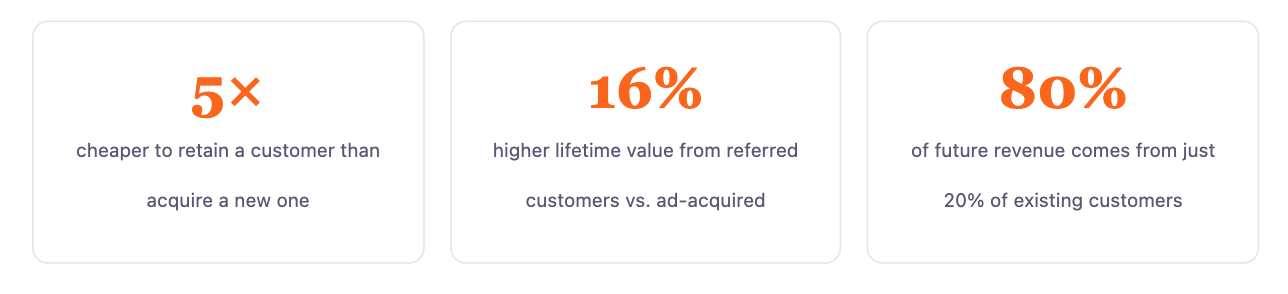
High CAC is usually a symptom of over-reliance on paid channels. Every new customer acquired through Meta or Google ads carries a cost that’s been rising steadily for years. A loyalty and referral program attacks CAC from two directions at once.
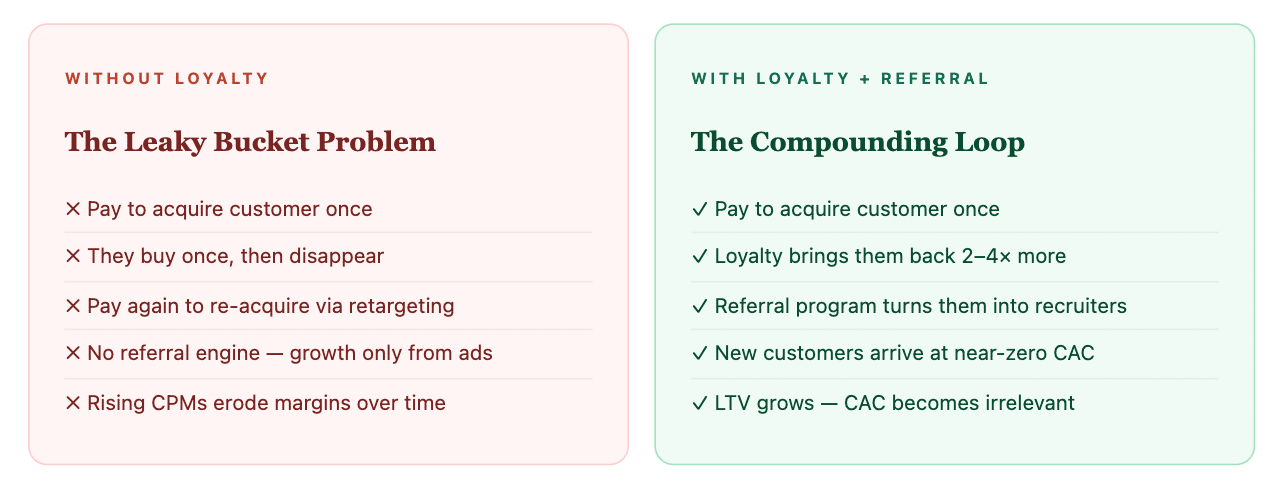
The real shift is in how you think about that first acquisition cost. With a loyalty program, you’re not paying $40 to acquire a customer who buys once. You’re paying $40 to acquire a customer who buys six times and refers two friends. The unit economics change completely.
Can customers earn points for writing reviews?
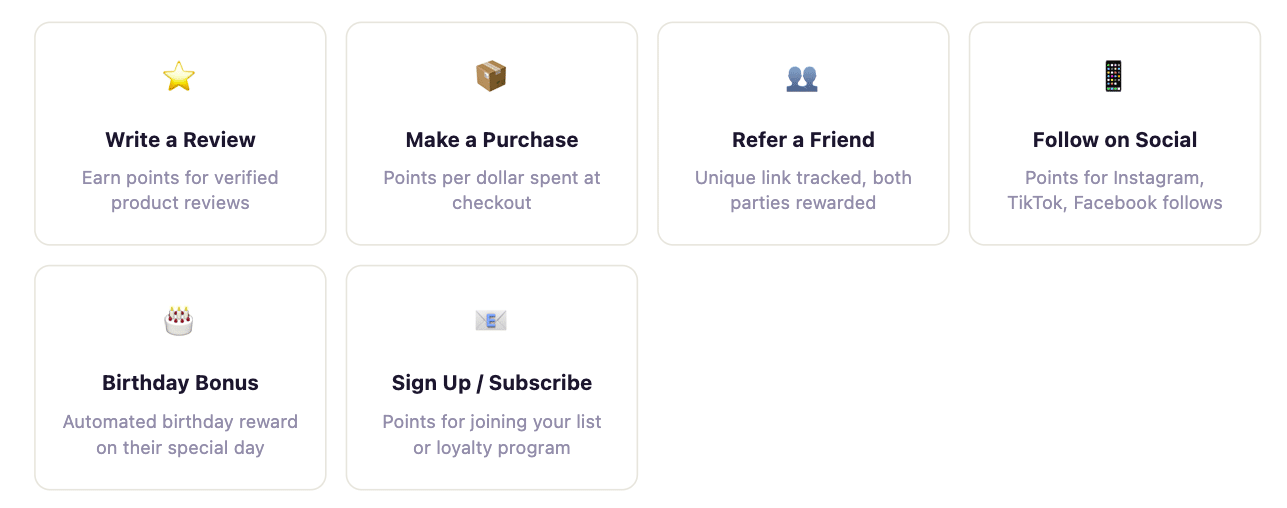
Yes — and this is one of the most strategically valuable earn actions you can enable. Reviews are critical for conversion, SEO, and trust. Rewarding customers for leaving them turns your loyalty program into a social proof engine, not just a discount mechanism.
With Kangaroo Rewards, you can assign points to a wide range of actions beyond purchases — giving you full control over what behaviors you want to reward and encourage.
The review incentive in particular has a compounding effect: more reviews improve your product page conversion rate, which means you get more out of every ad dollar you’re already spending — a loyalty action that directly improves paid channel ROI.
How does referral tracking work?
Referral tracking in Kangaroo Rewards is fully automated — no spreadsheets, no manual coupon management, no guesswork about who referred whom.
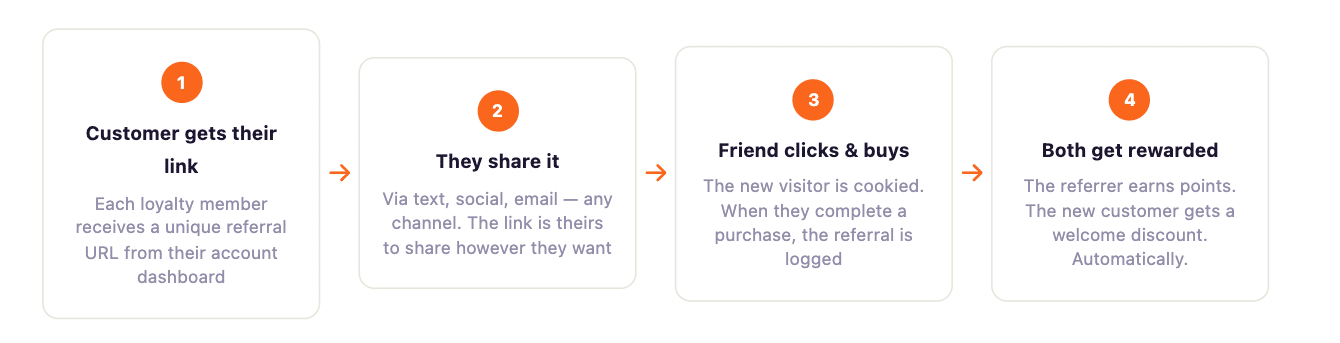
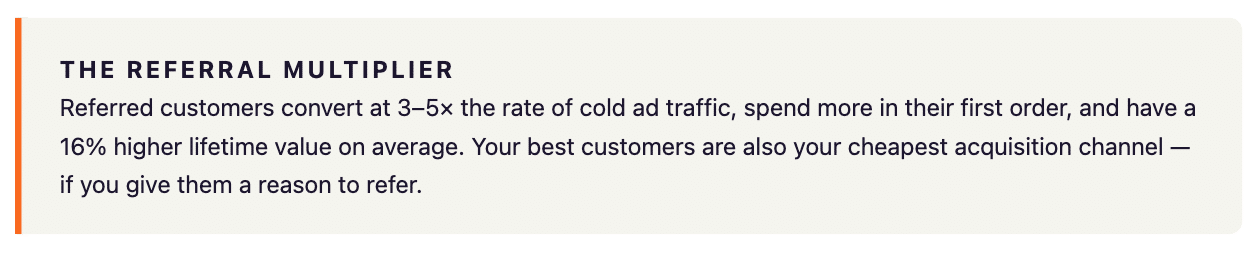
Every referral is tracked in your dashboard — you can see which customers are your top referrers, conversion rates by channel, and total revenue driven by your referral program. This turns word-of-mouth from something that just happens into something you can actually measure and optimize.

Will a loyalty program slow down my site?
Site speed is a legitimate concern — a slow store loses customers and hurts SEO rankings. It’s a smart question to ask before adding any third-party tool.
Kangaroo Rewards loads asynchronously. That means the loyalty widget loads independently from your core page content — it never blocks your product pages, collection pages, or checkout from rendering. Your Lighthouse scores and Core Web Vitals are not affected.
- Asynchronous loading. The script loads after your primary content — customers see your store immediately, loyalty widget follows in the background.
- Lightweight widget. The loyalty popup and point display are minimal in file size — comparable to a small image, not a full application.
- No checkout bloat. POS and checkout integrations are server-side where possible, so point calculation and redemption don’t add frontend load time at the most critical conversion moment.
- Tested on high-traffic stores. Kangaroo Rewards is used by stores processing thousands of orders per day — performance at scale is a core requirement, not an afterthought.
Does it integrate with Shopify, WooCommerce, or BigCommerce?
Yes — Kangaroo Rewards has native integrations with all three major ecommerce platforms, plus API access for custom or headless storefronts. Points are earned and redeemed directly at checkout, with no custom development required for standard setups.

Integration means your loyalty data and your order data live in the same ecosystem. You can segment loyalty members by purchase history, trigger rewards based on order events, and see the direct impact of your program on revenue — without manually exporting and cross-referencing spreadsheets.
What’s the best online loyalty program — and how does Kangaroo compare?
Most loyalty platforms for ecommerce do one or two things well and make you patch the rest together with integrations. The most common gaps operators run into: limited customization, referral programs that feel bolted on, weak analytics, or white-labeling that costs extra.
Here’s how Kangaroo Rewards stacks up on the features that actually matter for D2C brands:
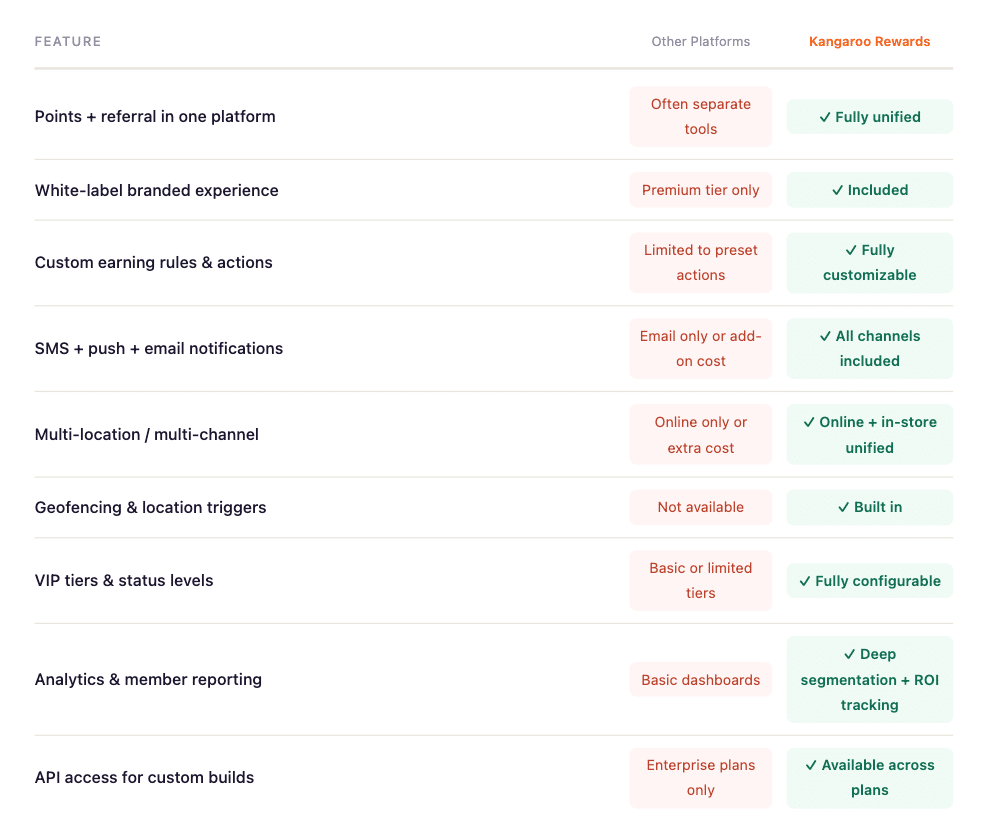
The short version: most platforms make you choose between loyalty and referral, or between online and in-store. Kangaroo Rewards was built to handle both without duct tape — which matters if you’re a D2C brand that also sells through wholesale partners, pop-ups, or physical retail.
Loyalty vs. ads: which is actually better for ecommerce growth?
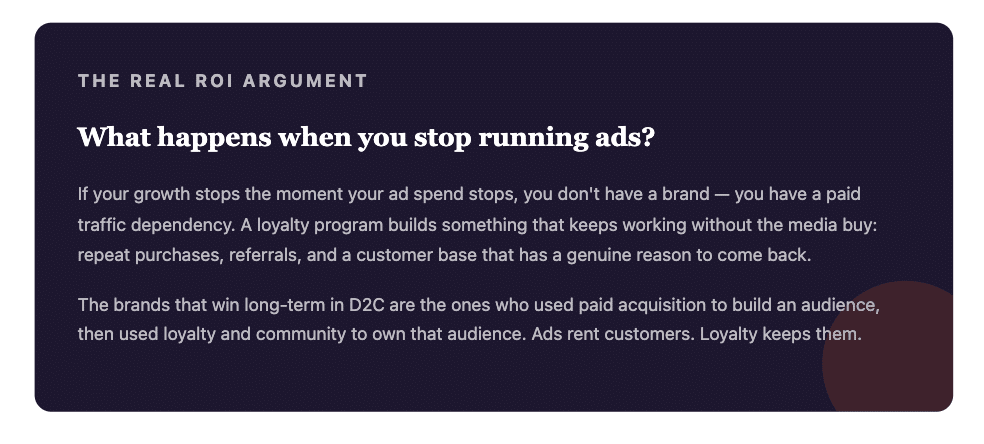
This is the question that gets to the heart of how most D2C brands think about their growth budget. The honest answer is: they’re not substitutes — but for most brands, loyalty delivers a dramatically better return on invested dollar once you have an existing customer base.
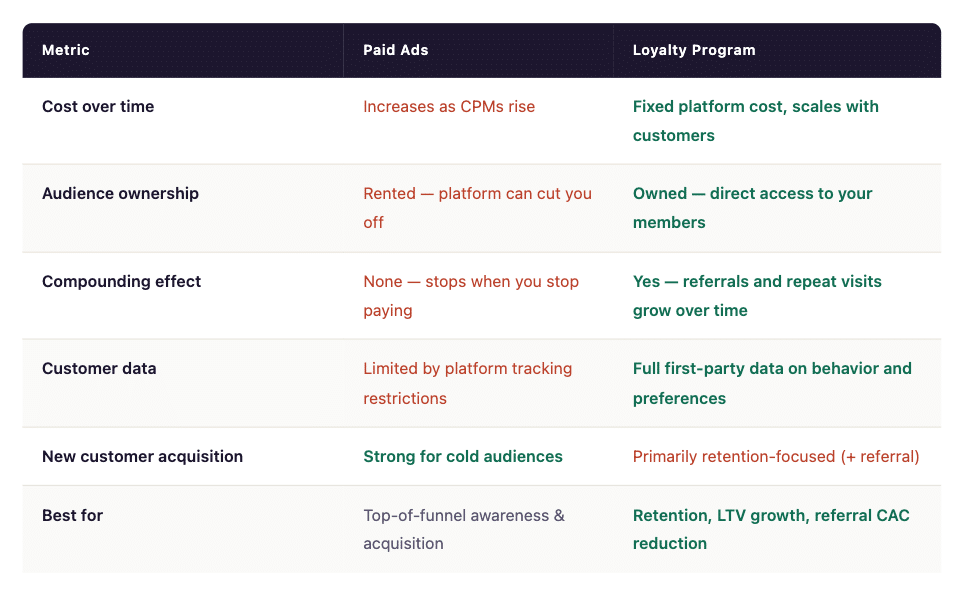
The winning strategy for most D2C brands isn’t loyalty or ads — it’s using ads to fill the top of the funnel, and loyalty to make sure customers don’t fall out the bottom.
A brand spending $50,000/month on acquisition that converts 2% of customers into loyal repeat buyers is running a very different business from one that converts 15%. The loyalty program changes the math on every ad dollar you’ve already committed to spending.