

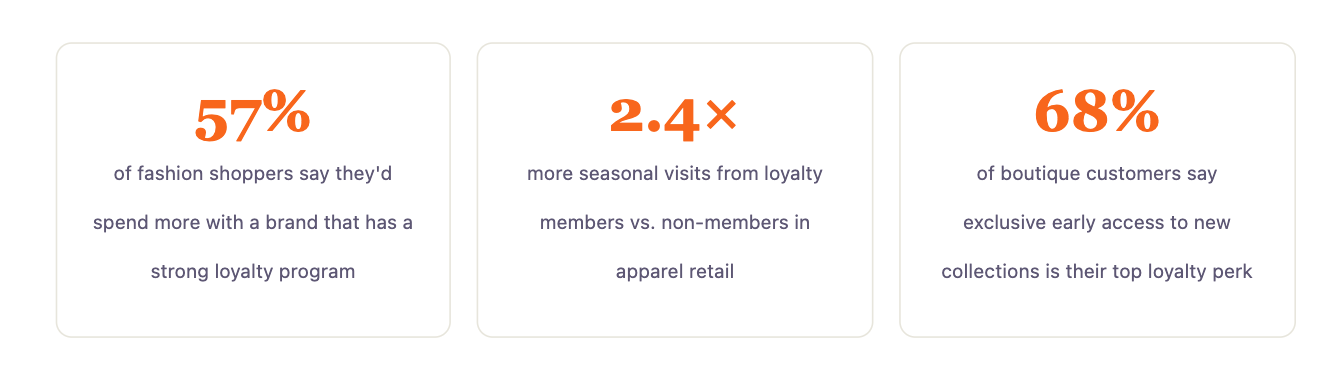
Fashion retail is different from most categories. Customers don’t buy clothes every week — they buy seasonally, emotionally, and often impulsively. That makes loyalty harder to build, and more valuable when you get it right.
These are the questions boutique owners across Canada and the US ask us most — from “why isn’t our program working?” to “how does Kangaroo compare to what we’re already using?” We’re answering all of them, directly and without the fluff.
Why do clothing store loyalty programs fail to boost seasonal visits?
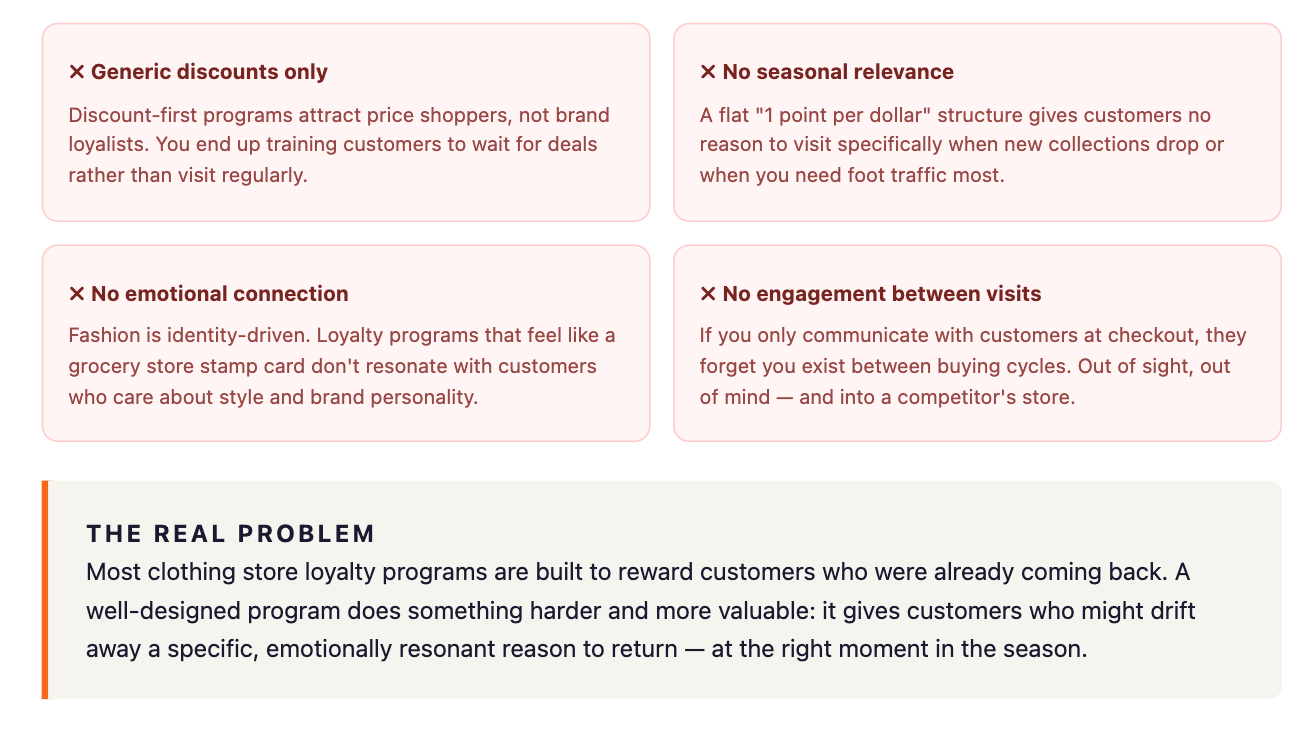
This is the most common frustration we hear from fashion retailers. They launch a program, get some sign-ups, and then nothing changes. Customers still come in once, buy something on sale, and disappear until the next markdown. The program exists — it just doesn’t work.
The root cause is almost always the same: the program was designed around transactions, not around how fashion customers actually think and shop.
What makes fashion retail loyalty software effective beyond simple discount cards?
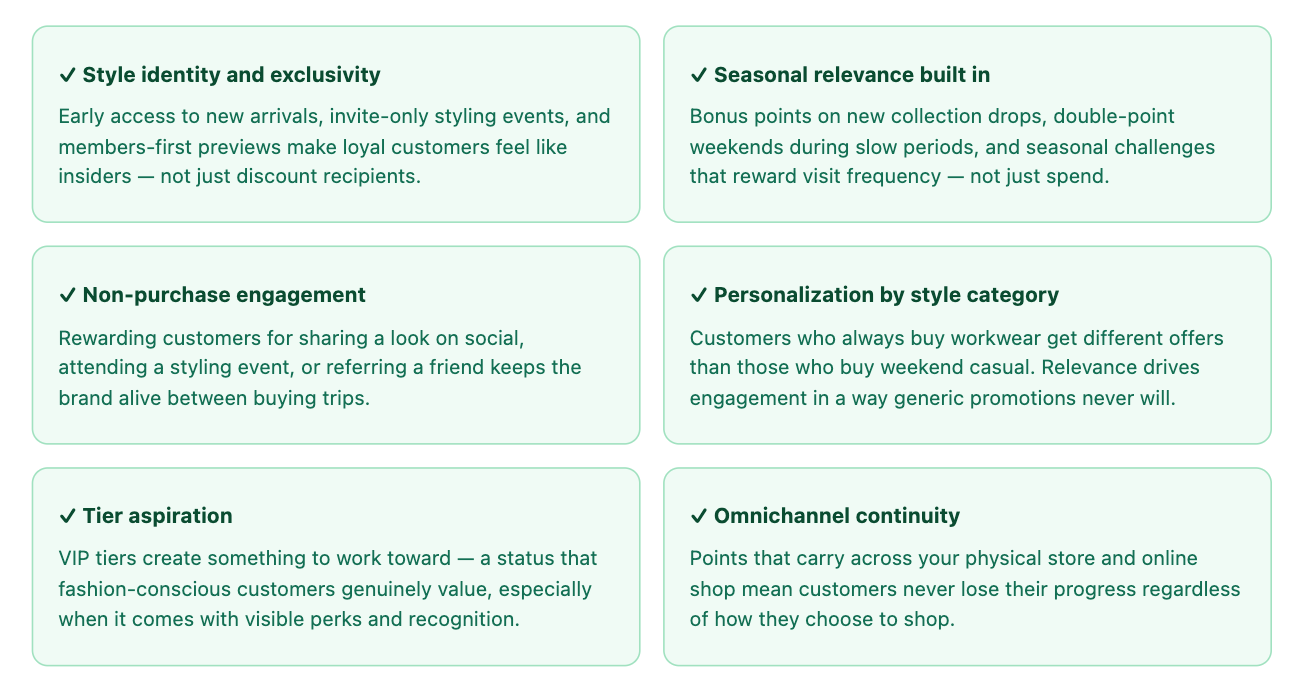
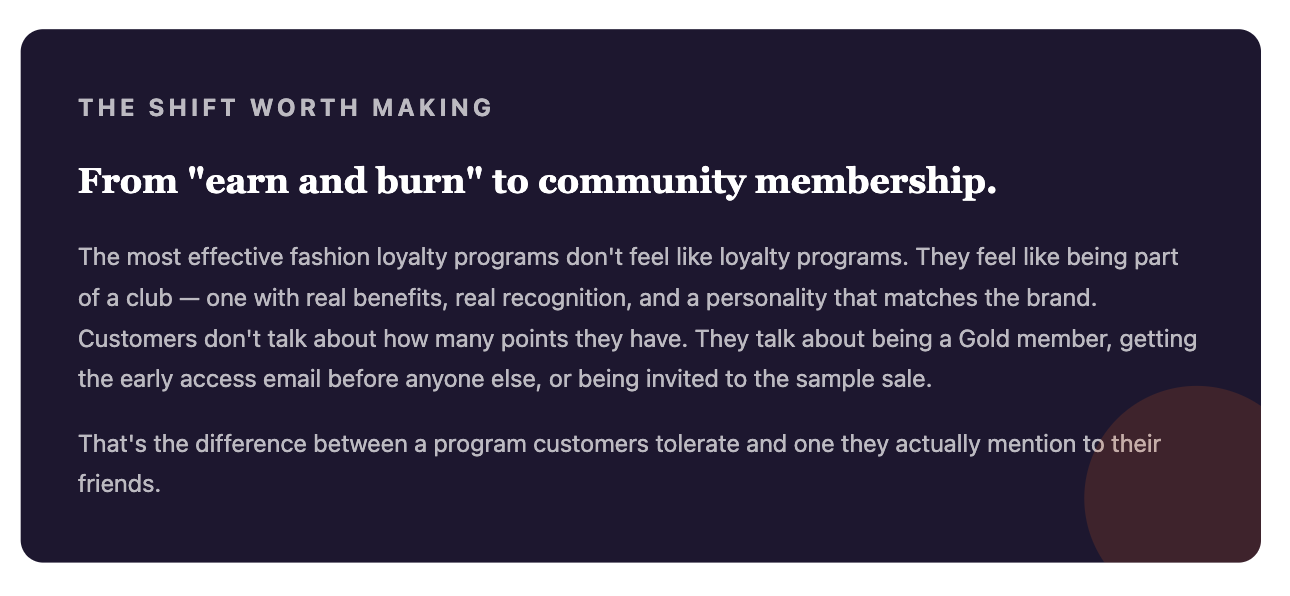
The difference between a loyalty program that feels like a punch card and one that actually builds brand affinity comes down to whether it treats customers as shoppers or as style-conscious individuals who chose your brand for a reason.
Effective fashion loyalty goes beyond the transaction in several specific ways:
How do apparel store loyalty programs encourage customers to spend more?
There are two distinct mechanisms at work — and both matter. The first is tier progression, which motivates customers to consolidate spending. The second is point timing, which influences when and what they buy.
- The tier gap effect. When a customer sees they’re $85 away from Gold status, they think about what they were planning to buy anyway — and whether they can add one more piece. This effect is strongest when the tier benefit is genuinely desirable, like free alterations, early access, or a styling consultation.
- Bonus points on new arrivals. Triple points on new collection items during launch week drives customers to buy at full price during the window when margins are highest — instead of waiting for the sale.
- Category multipliers. If you want to move accessories or push a new category, assign a temporary point multiplier to it. Customers who are on the fence about adding a bag to their purchase suddenly have a points-based reason to do it.
- Near-reward nudges. An automated message — “You’re 40 points away from your $20 reward” — is one of the highest-converting notifications in retail loyalty. It brings customers back specifically to close the gap, and they almost always spend more than the reward is worth.
- Birthday and anniversary offers. A meaningful birthday gift — not a generic 10% off — creates an emotional occasion to visit. Customers who come in for a birthday often spend significantly above the reward value, especially if the offer is time-limited.
Does Kangaroo Rewards support cashback and store credit for clothing retailers?
Yes — and this flexibility matters more in fashion than most categories. The reward currency you offer shapes how customers perceive the value of your program and, critically, how likely they are to redeem and return.
Kangaroo Rewards supports multiple reward structures so you can match your program to your brand positioning:
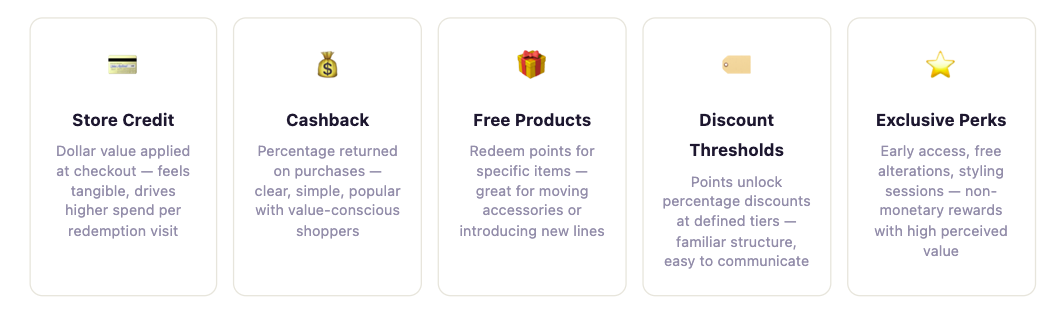
For fashion boutiques, a hybrid approach often works best: points that convert to store credit for everyday members, combined with exclusive non-monetary perks for VIP tiers. The store credit keeps customers coming back to spend. The exclusive perks create the emotional loyalty that makes them stay even when a competitor has a sale.
Can Kangaroo handle seasonal double-point events for apparel stores?
Yes — and for fashion retail, this feature alone can materially change your seasonal traffic patterns. The ability to assign point multipliers to specific time windows, product categories, or collections gives you a direct lever to influence when customers buy and what they buy.
Here’s how smart fashion retailers use seasonal events across the year:
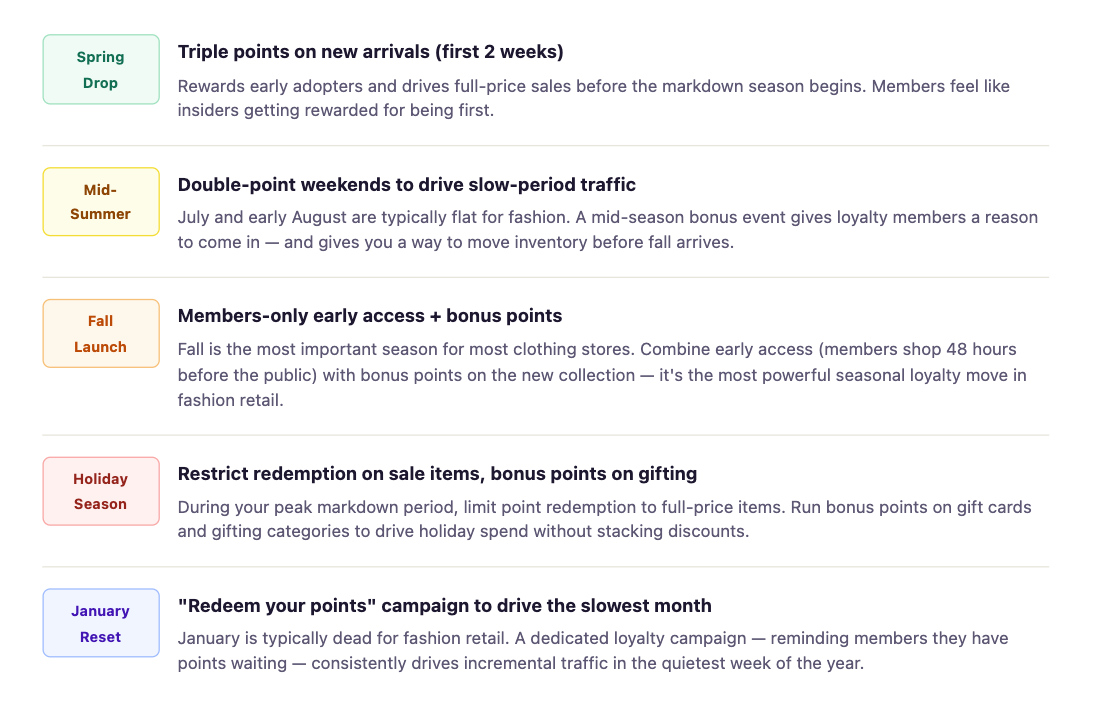
All of these events are fully schedulable in Kangaroo Rewards — set them once at the start of the season and they run automatically. No manual adjustments, no staff reminders, no missed windows.
Can Kangaroo personalize loyalty rewards based on purchase history?
Yes — and in fashion, personalization is the difference between a message that gets opened and one that gets ignored. A customer who always buys your weekend casual line doesn’t want an email about your new workwear collection. A customer who buys accessories on every visit should see an offer tied to accessories, not a generic “come back soon” message.
Kangaroo Rewards segments your loyalty members by behavioural data so that your communications and offers are relevant by default, not by accident:
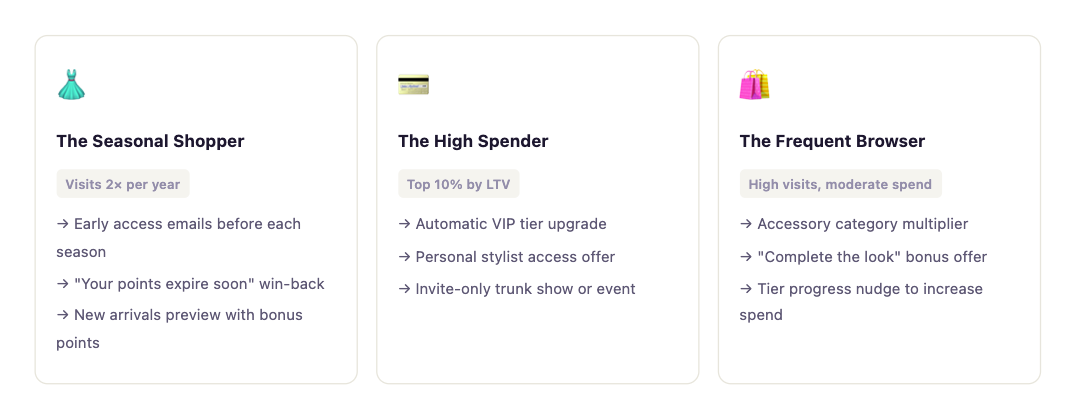
Personalization in Kangaroo Rewards operates at the segment level — you define the rules, the platform applies them automatically. You don’t need a marketing team member manually building lists each time. Once the segments are configured, the right message goes to the right customer at the right moment.