
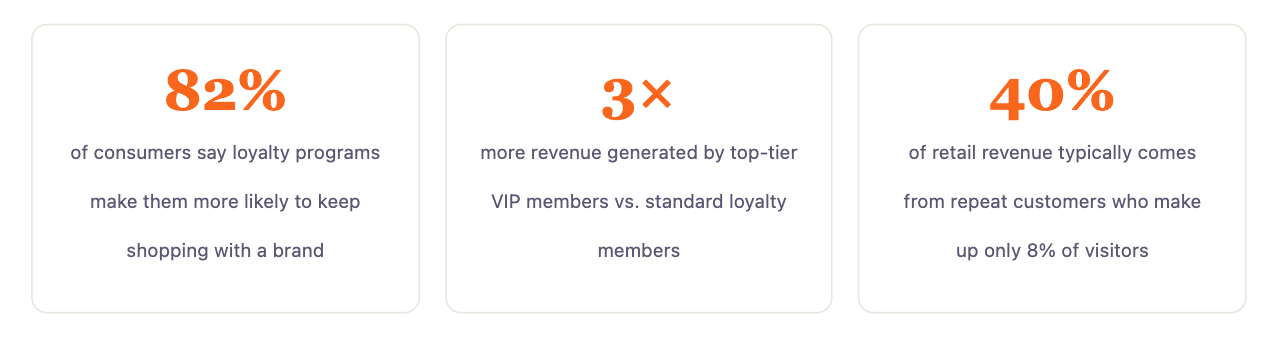
Retail loyalty programs have come a long way from a laminated punch card behind the counter. Today’s shoppers move fluidly between your storefront and your website — and they expect their relationship with your brand to move with them.
These are the five questions retail store owners ask us most. We’re answering all of them — in full, without the sales pitch.
Can customers earn points online AND in-store?
Yes — and this is one of the most important capabilities to get right. The modern retail customer doesn’t think in channels. They browse your Instagram, visit your store on Saturday, order something online Tuesday, and return it in person on Thursday. Your loyalty program needs to follow that journey, not fragment it.
Kangaroo Rewards is built for omnichannel retail — a single customer profile that tracks every interaction, regardless of where it happens. Points earned in-store are visible online. A reward unlocked on your website can be redeemed at the register. No double accounts, no manual reconciliation, no customers asking why their points didn’t carry over.
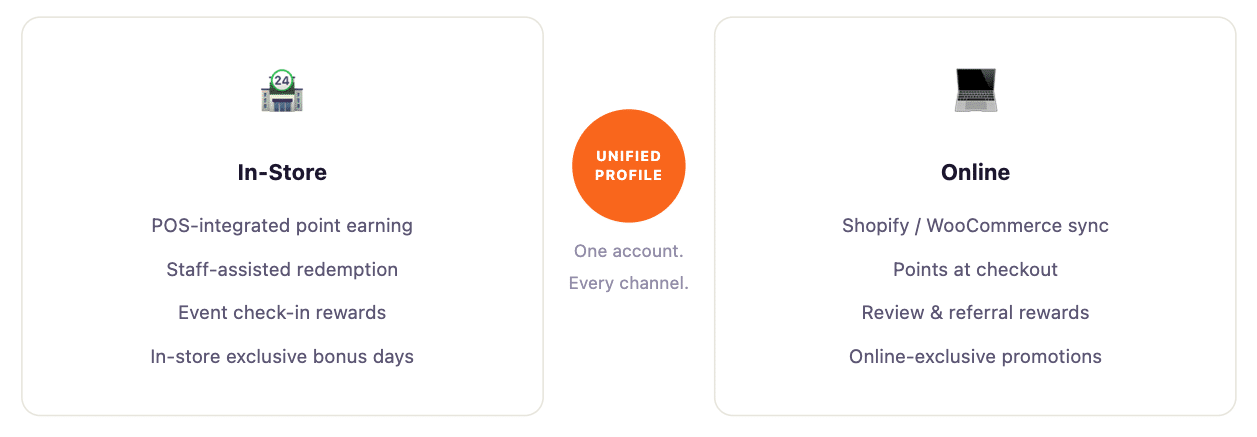
For retailers with a physical POS and an online store, setup is straightforward. Kangaroo connects to your existing POS system and ecommerce platform, syncing customer accounts and point balances in real time. Your staff don’t need a separate device or workflow — it’s all built into checkout.
How do I reward high spenders differently?
Not all customers are equal — and a flat loyalty structure that treats your best customers the same as someone who bought once two years ago is a missed opportunity. VIP tiers are how you fix that.
Kangaroo Rewards lets you build fully configurable tier structures — you set the spending thresholds, the tier names, and exactly what each level unlocks. Here’s an example of what a retail tier structure might look like:
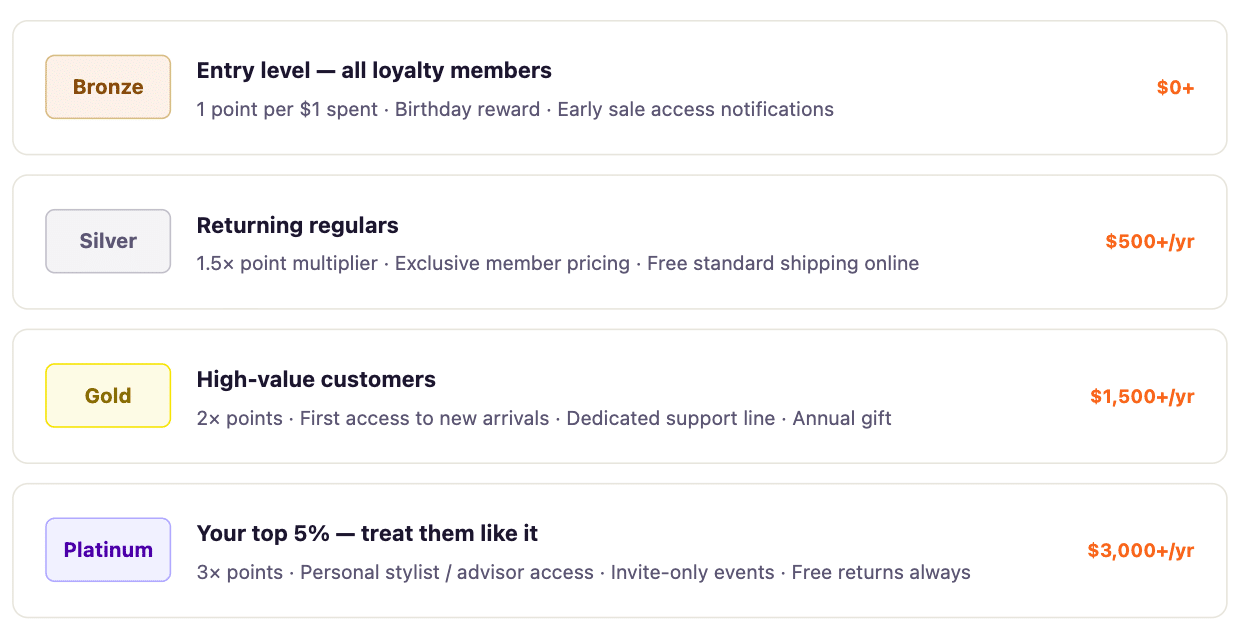
Tiers work because they create aspiration. A Silver customer who sees they’re $180 away from Gold is motivated to consolidate their spending with you rather than split it with a competitor. That pull effect — the progress toward something — is one of the most powerful behavioral levers in retail loyalty.
What reports will I get on repeat purchase rates?
One of the biggest differences between running a punch card and running a digital loyalty program is data. With a punch card, you know roughly how often a customer comes in. With Kangaroo Rewards, you know exactly who your regulars are, how often they buy, what they spend, and when they start to drift away.
Here’s what’s available in your reporting dashboard:
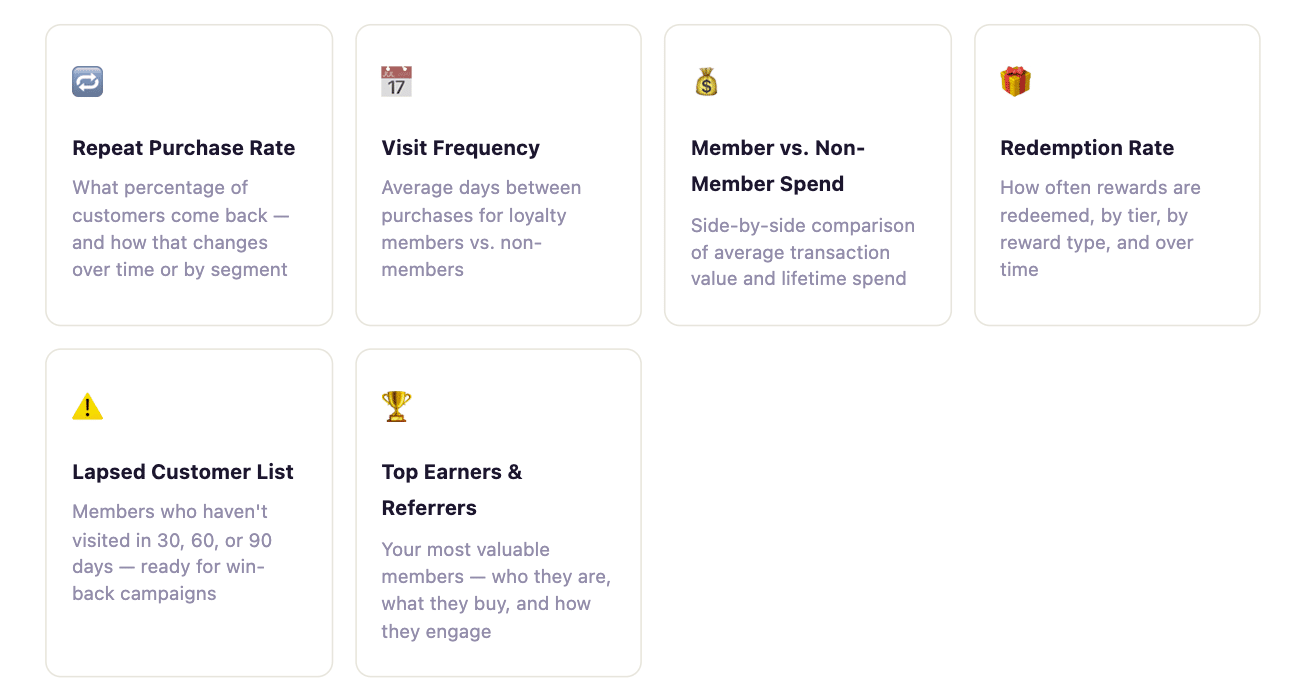
The repeat purchase rate report is particularly valuable for retail because it answers the question that matters most: is this program actually making people come back more often? You can track that metric before and after launching your program, and see exactly how loyalty membership correlates with return behaviour.
Can I reward customers for non-purchase actions like event check-ins?
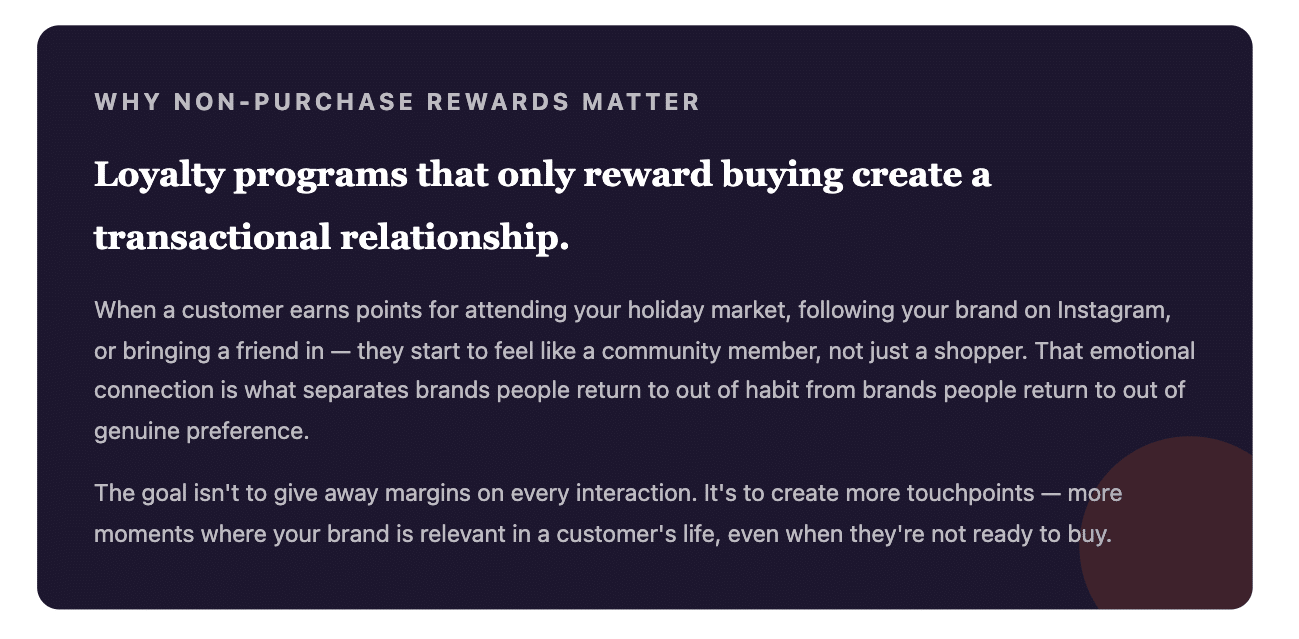
Yes — and for retail stores, this is one of the most underused features available. The best loyalty programs keep customers engaged between purchases, not just at the register. Non-purchase rewards are how you stay top of mind during the weeks or months between buying cycles.
With Kangaroo Rewards, you can assign points to any action you define. For retail, that opens up a wide range of possibilities beyond the transaction:
Event check-ins: Reward customers for attending in-store events, product launches, trunk shows, or community nights. Points for showing up builds a habit of coming in — even when they’re not planning to buy.
Parrainages : Customers who bring a friend earn points when that friend makes their first purchase. Word-of-mouth retail is powerful — a referral program formalizes it and gives people a reason to do it more often.
Social media follows and shares: Points for following your Instagram, sharing a post, or tagging your store. Builds your audience while keeping loyalty members engaged between visits.
Writing a product review: Incentivize reviews on your website or Google Business profile — both improve conversion and local search visibility, which drives more foot traffic to your store.
Birthday and profile completion: Customers earn points for completing their loyalty profile and registering their birthday. This gives you first-party data to personalize offers — and a reason to reach out on their special day.
How do seasonal sales affect loyalty redemption rates?
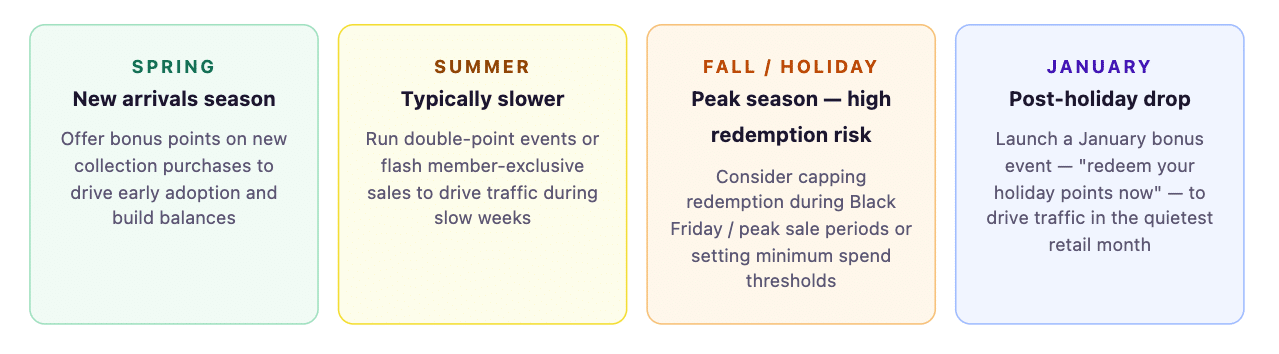
This is a sharp operational question — and it deserves a direct answer. Yes, seasonal sales do affect redemption. When customers have large point balances and see a major sale or promotion, redemption spikes. For some retailers, this is a concern. Managed well, it’s actually an opportunity.
Here’s what typically happens across the retail calendar — and how to use your loyalty program strategically at each point:
Managing redemption during peak sales
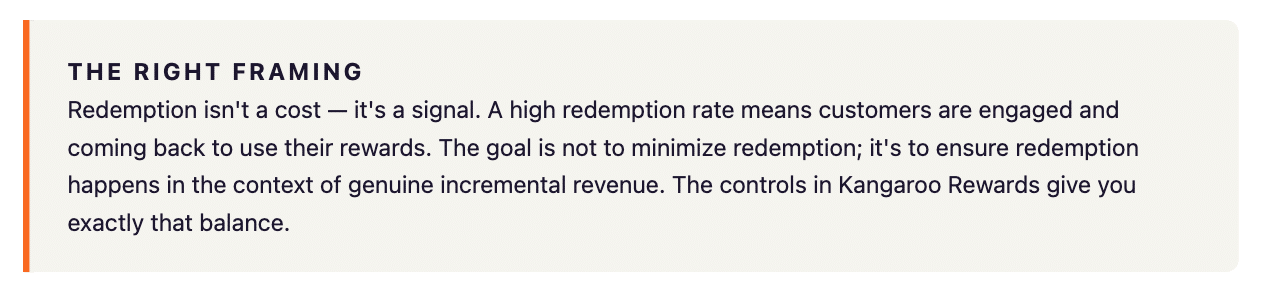
The concern most retailers have is this: a customer redeems $20 in points during a 30% off sale — are you giving too much away? The answer depends on how you structure redemption rules, which Kangaroo Rewards lets you control fully.
- Set minimum spend thresholds for redemption. Points can only be redeemed on orders over $X — this ensures redemption happens alongside real spend, not instead of it.
- Exclude sale items from redemption. During peak markdown periods, restrict points redemption to full-price items only. Customers still earn points on sale purchases — they just can’t stack discounts on already-discounted items.
- Use slow seasons proactively. Instead of waiting for redemption to spike during your sale, run a members-only bonus event in October or January — channelling redemption to when you need the foot traffic most.
- Track redemption margin impact. Your Kangaroo dashboard shows the revenue generated alongside every redemption — so you can see whether point redemptions are driving incremental spend or simply discounting purchases that would have happened anyway.