

It starts with a conversation that goes something like this: “Our POS system came with a loyalty program built right in. We turned it on. Now what?”
It’s a reasonable question — and a dangerous trap. Built-in loyalty programs bundled into point-of-sale systems are one of the most widespread and least-examined mistakes in modern retail and hospitality. They appear practical, integrated, and cost-efficient. But beneath the surface, they consistently fail to build what loyalty actually requires: a deep, personalized, emotionally resonant relationship between your business and your customer.
In this article, we’re going to pull back the curtain on why POS-based loyalty programs underperform, what businesses lose by relying on them, and why partnering with a purpose-built loyalty solution like Kangaroo Rewards is one of the highest-ROI decisions a growing business can make.
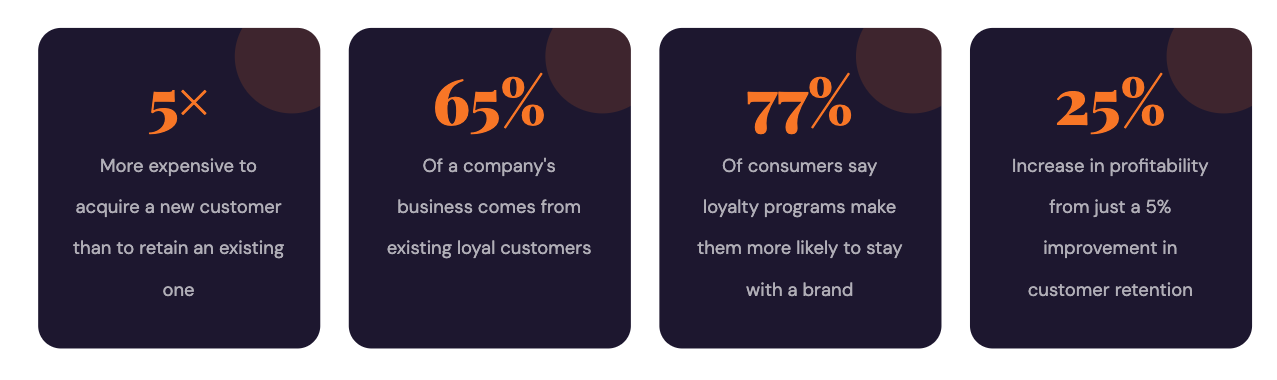
The stakes couldn’t be higher. Yet most businesses treat loyalty as a checkbox, not a strategy. And their POS vendor is happy to let them believe a basic points-for-purchase feature is enough to capture all of that potential.
It isn’t. Not even close.
7 Critical Ways POS Loyalty Programs Fail Your Business
They Collect the Wrong Data — or Almost None at All
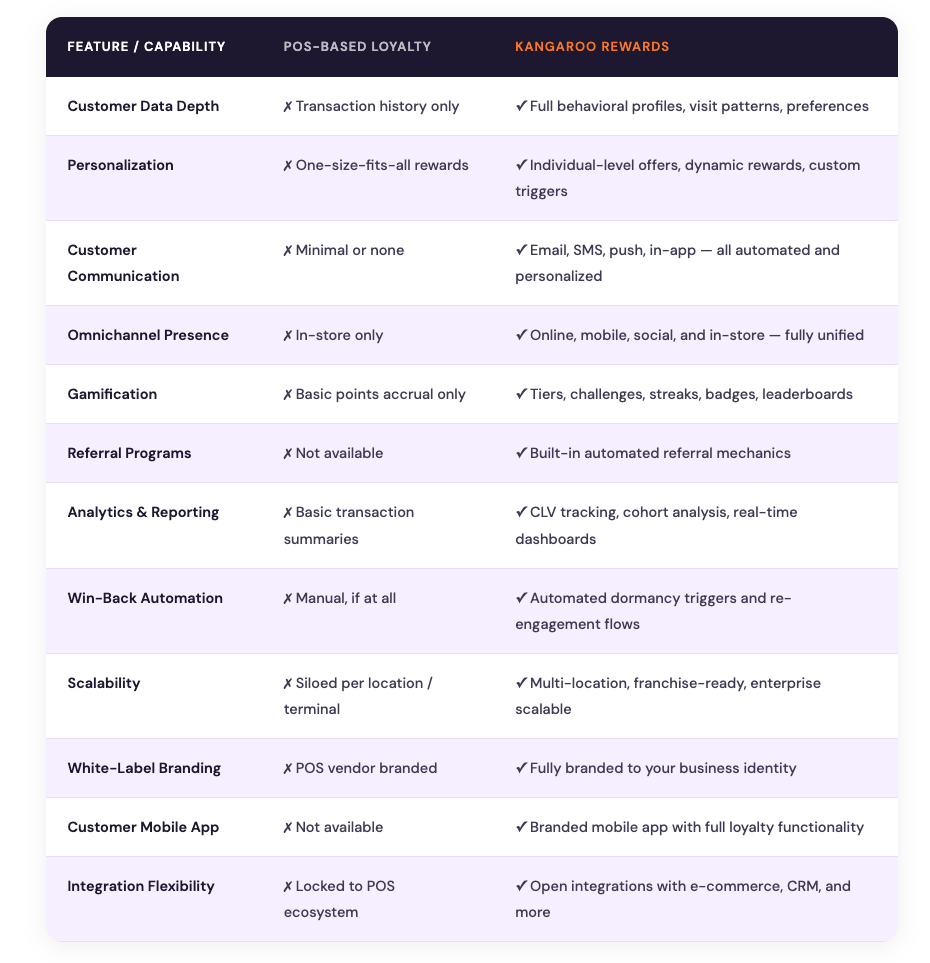
Most POS loyalty modules are designed to track one thing: purchases. How many transactions, how many points, maybe a spend threshold. But real loyalty intelligence requires knowing far more — when customers are drifting away, which segments respond to which incentives, who your highest-lifetime-value customers are, and what triggers a lapsed customer to return. POS systems lack the architecture for this kind of deep behavioral profiling. The result? You’re flying blind, making loyalty decisions based on incomplete, low-fidelity data that doesn’t tell you what actually matters.
There’s No Real Personalization
Customer loyalty in 2024 is personal. Consumers don’t just want points — they want to feel known, recognized, and valued as individuals. POS loyalty systems almost universally offer a one-size-fits-all rewards structure. Every customer gets the same points rate, the same threshold, the same generic email (if any communication goes out at all). This approach is not just ineffective — it’s actively alienating to your best customers, who expect more from brands they’ve chosen to frequent. Personalization at scale is impossible without purpose-built technology.
Customer Communication Is Essentially Non-Existent
When did you last hear from a brand solely because their POS loyalty program prompted a meaningful outreach? Probably never. POS loyalty platforms have minimal (if any) native communication capabilities. There’s no automated win-back campaign when a customer hasn’t visited in 45 days. There’s no birthday offer, no milestone celebration, no VIP-tier upgrade notification. The transaction ends at the register — and so does the relationship. The most critical moments in the customer lifecycle go unaddressed, and with them, the revenue those moments could generate.
They’re Invisible Outside the Four Walls of Your Store
Modern commerce is omnichannel. Your customers browse on Instagram, order online, walk in-store, and Google you on Saturday morning before deciding where to spend their weekend. POS loyalty programs are, by definition, bound to the point of physical sale. They offer no web integration, no mobile app presence, no e-commerce connectivity, and no social engagement layer. Your loyalty program becomes invisible the moment a customer walks out the door — and invisible programs don’t drive behavior.
No Gamification, No Emotional Engagement
Human beings are hardwired for achievement, progression, and reward. The most effective loyalty programs in the world leverage this psychology through tiered memberships, challenges, streak rewards, badges, referral bonuses, and social recognition. POS loyalty systems offer none of this. A flat “earn 1 point per dollar” structure creates zero emotional engagement and zero reason for customers to think about your brand between visits. Without gamification, loyalty programs become invisible — and invisible programs get abandoned.
Zero Reporting That Drives Real Business Decisions
What’s your loyalty program’s actual impact on customer lifetime value? What percentage of enrolled members are active? What’s your 90-day redemption rate, and what does it say about program health? What’s the average revenue difference between a loyalty member and a non-member? If your POS loyalty program can’t answer these questions — with clarity, in real time — then it’s not a business tool. It’s a checkbox. Robust analytics and actionable reporting are non-negotiable for any program that’s serious about results.
They’re Not Built to Grow With You
As your business grows — new locations, new channels, franchise expansion, product line diversification — your loyalty program must scale with it. POS loyalty systems are typically siloed per location, per terminal, or per account structure. Consolidating data across locations is often manual or impossible. Adding new reward structures, partner programs, or customer tiers requires either expensive customization or a complete platform migration. You’ll inevitably outgrow the system at exactly the moment when loyalty should be generating its highest return.
The Real Cost of “Free” Loyalty
Here’s the uncomfortable math that most businesses never run. POS loyalty programs are often pitched as “included” in your subscription — a zero-cost add-on that justifies turning the feature on. But the cost isn’t in the line item. It’s in the opportunity cost of customers who enrolled, had a bad experience, and never came back.
Consider this: a customer who enrolls in a loyalty program and then feels ignored — no communication, no recognition, no reason to return — is arguably worse than a customer who never enrolled at all. You’ve captured their information and their expectation, then failed to deliver. That’s not neutral. That’s trust destroyed.
Studies consistently show that customers who have a negative experience with a loyalty program are significantly less likely to return than those who were never enrolled in one. Your “free” loyalty program may be actively generating churn among the customers most likely to be your highest-value regulars.
What a Purpose-Built Loyalty Platform Actually Delivers
The difference between a POS loyalty module and a dedicated loyalty platform is not a matter of degree — it’s a matter of kind. A purpose-built loyalty solution is engineered from the ground up around a single mission: creating customers who come back more often, spend more per visit, and bring others with them.
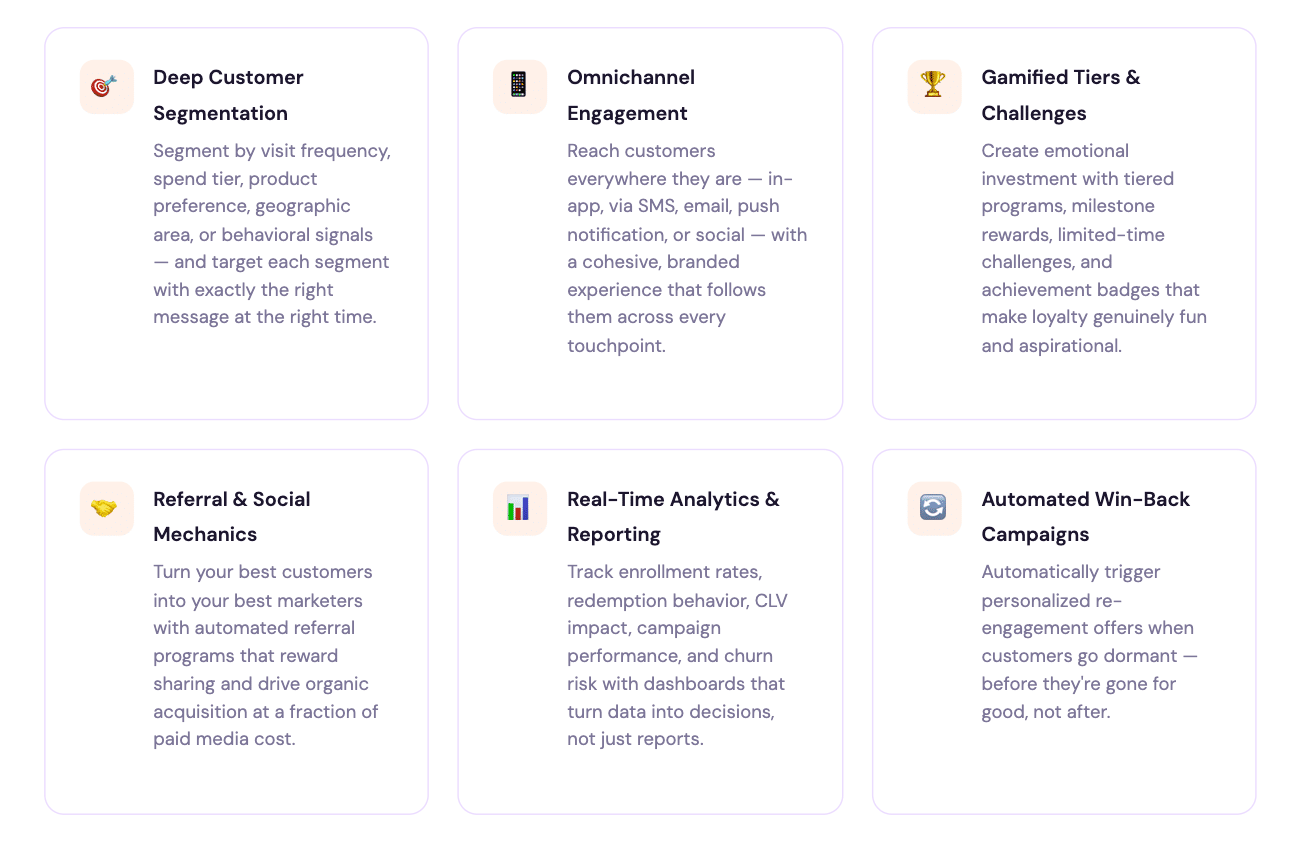
Here’s what that actually looks like in practice:
POS Loyalty vs. Kangaroo Rewards: The Real Comparison
The Kangaroo Difference: Built for Loyalty, Not Bolted On
When you partner with Kangaroo Rewards, you’re not activating a feature. You’re deploying a complete customer retention ecosystem engineered to grow alongside your business and deepen with every customer interaction.
Intelligent Segmentation That Drives Real Results
Kangaroo Rewards enables true behavioral segmentation — grouping customers not just by how much they spend, but by when they visit, how often they respond to communications, what product categories they prefer, and how recently they’ve engaged. This means your promotions reach exactly the right people with exactly the right offer, reducing waste and dramatically increasing conversion rates on every campaign you run.
Omnichannel Reach That Goes Where Your Customers Go
Modern customers don’t live at your register. They’re on their phones, scrolling Instagram, reading emails during their lunch break, and responding to SMS messages while commuting. Kangaroo Rewards meets them at every one of these touchpoints with coordinated, branded communications that reinforce your loyalty program and your brand simultaneously — creating top-of-mind awareness that translates directly into return visits.
Gamification That Creates Genuine Emotional Investment
Kangaroo’s tiered loyalty architecture, challenge mechanics, and milestone rewards transform your program from a passive discount tracker into an active engagement engine. When customers have status to protect, milestones to reach, and rewards worth pursuing, they think about your brand between visits — and they come back more frequently to maintain their progress. This is the difference between a loyalty program that drives behavior and one that simply records it.
Referral Programs That Turn Customers Into Advocates
Your most loyal customers are also your most credible marketers — if you give them the tools and incentives to share their experience. Kangaroo Rewards includes built-in referral mechanics that automatically reward customers for bringing in new business. The result is organic, trust-based acquisition that consistently outperforms paid advertising on cost-per-acquisition metrics. Your loyal customer base becomes a self-sustaining growth engine.
Analytics That Answer the Questions That Matter
Kangaroo Rewards delivers the kind of reporting that transforms loyalty from a marketing line item into a boardroom conversation. What’s the average spend difference between loyalty members and non-members? Which campaigns generated the highest redemption rate? Which customer segments are most at risk of churning in the next 30 days? These aren’t vanity metrics — they’re the data points that drive profitable business decisions, and Kangaroo puts them in your hands in real time.
A Branded Experience That Reflects Your Business — Not Your Vendor’s
Your loyalty program should feel like yours. Kangaroo Rewards offers fully white-labeled solutions including branded mobile apps, custom reward structures, and communications that carry your voice, your logo, and your identity. Customers engage with your brand, not a third-party platform — which means every loyalty interaction builds equity in your business, not someone else’s.
Scalability That Grows as You Do
Whether you’re managing one location or fifty, Kangaroo Rewards is built to scale. Multi-location dashboards, consolidated customer profiles across sites, franchise management features, and flexible reward structures mean your loyalty strategy can grow in sophistication as your business grows in size. You won’t find yourself migrating platforms at the worst possible time because you’ve outgrown what your POS vendor cobbled together.
The Bottom Line: Loyalty Is a Strategy, Not a Feature
The businesses winning on customer loyalty right now are not those that turned on a toggle in their POS admin panel. They’re the businesses that made a deliberate decision to invest in a loyalty strategy — one built on real data, genuine personalization, and continuous engagement that makes every customer feel valued long after their transaction is complete.
Your POS system is excellent at processing payments. But it should never be the tool responsible for building the relationships that keep customers coming back for years.
That requires a dedicated partner. One whose entire product exists to solve exactly this problem, whose roadmap is driven entirely by loyalty outcomes, and whose success is measured by yours.
That’s what Kangaroo Rewards is built to be.
If you’re currently relying on a POS loyalty module and wondering why your retention numbers aren’t moving — the answer isn’t to optimize the module. It’s to replace the philosophy behind it. Loyalty is not a transactional convenience. It’s a relationship investment. And the businesses that treat it that way are the ones that win — not just this quarter, but for the long term.